
Data Recording Solutions
Conduant builds the recording engine behind your digitizer, sensor, or FPGA front end. Find the page that matches what you record, the capability you need, or the interface your data arrives on.
- Recording, storage, and playback systems that arrive tested and record out of the box
- Systems that sit behind the instruments and interfaces your program already runs
- Longmont, CO engineers who answer the phone about the system they designed
US-based engineers available.
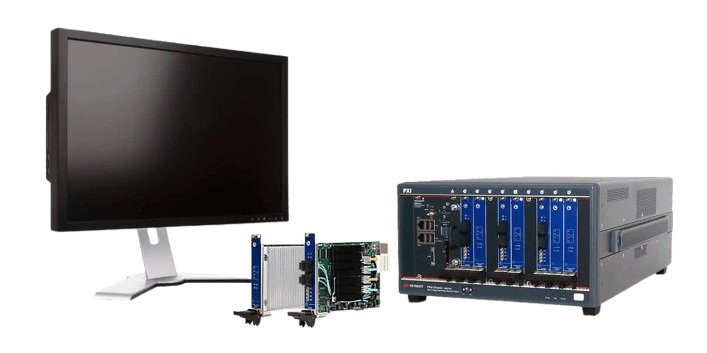
The mission you are on
Each page covers what the recorder has to do in that environment, which front ends it sits behind, and what the data looks like coming off them.
Radar and Electronic Warfare
Capture pulsed RF and EW data off your receiver, then replay it to drive hardware-in-the-loop test.
Radar and EW →RF and Spectrum Recording
The recording backend behind an analyzer or digitizer, for I/Q and wideband capture past onboard memory.
RF and spectrum →Radio Astronomy and VLBI
Mark 6 recording for observatories, geodetic sessions, and correlator workflows.
Radio astronomy →5G and 6G Communications Test
Capture a full conformance run at full bandwidth, then replay the exact signal for regression.
Communications test →What the system does
Three things happen to a high-speed stream once it leaves your front end. It gets captured, it gets held somewhere fast enough to keep up, and it comes back out for test.
High-Speed Data Recording
Start here. How the record, store, and replay path fits together, and why a dedicated recorder holds a rate a server cannot.
Data recording →Signal Playback and Stimulation
Recorded data read back out at full rate to drive a system under test. It is a data replay engine, not a data simulator or generator.
Signal playback →Data Storage and Drive Modules
Single-slot NVMe storage for PXIe systems, fixed or removable, sized to the run and quick to offload.
Storage modules →The interface it arrives on
If you have already specced the architecture, start from the transport. Each page covers how the stream comes in and what the recorder does with it from there.
Xilinx Aurora Recording
Record the data your FPGA streams over Aurora, up to 24 optical channels on one board.
Aurora recording → Ships todayODI and Interlaken Recording
Record over the non-proprietary optical standard, up to 160 Gbps per fiber, across instrument formats.
ODI recording → 10GbE now10 Gigabit Ethernet Recording
Move real-time source data into the recorder over 10 Gigabit Ethernet as UDP, at line rate.
Ethernet recording →What Conduant builds
Specifications, configurations, and datasheets live on the product pages.
Built and supported in Longmont, Colorado
Conduant has built recording systems since 1996, with hundreds of installations behind it. The engineers who design the systems are the ones who answer the phone about them.

- ✓Tested before it ships. Every system is assembled, run at rate, and verified before it goes in a crate.
- ✓No fees after the order. No change orders, no travel charges, no forced support contract.
- ✓Made in the United States. Design, build, and support all happen in Longmont, Colorado.
Not sure which page you need?
Tell us your data rate and your interface. A Conduant engineer will map it to a system, or tell you straight if we are not the right fit.
US-based engineers available.