Menu Close

High-Speed Data Recording Solutions

The High-Speed Data Recorder That Never Drops a Packet

StreamStor® records, stores, and replays already-digitized data at full line rate. It is the recording engine behind your digitizer, sensor, or FPGA front end, A single stream captures at up to 160 Gbps, and one system takes eight 40 Gbps inputs or two at 160 Gbps, with room to scale further. Zero dropped packets, no capture code to write. Proven from radio astronomy observatories to radar ranges to 5G validation labs.

160 Gbps per stream, and one system takes eight 40 Gbps inputs or two at 160 Gbps
Records, stores, and replays your digitized stream at full rate
Works behind any front end over AMD Aurora, Keysight ODI, or 10 Gigabit Ethernet
Turnkey and proven, deployed since 1996 across defense, aerospace, and radio astronomy

A consultation with an applications engineer. No obligation. Discuss your data rates, interface, and environment.

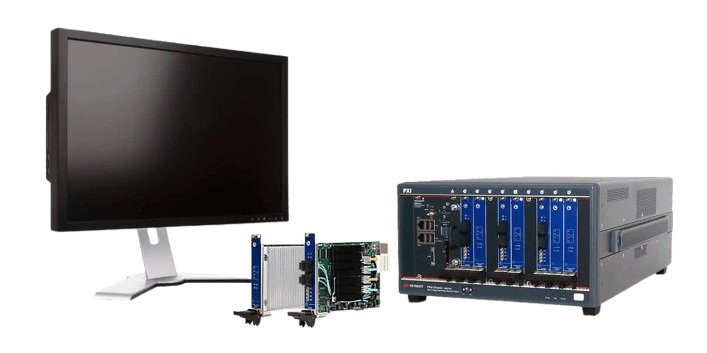
StreamStor Cobra high-speed data recorder
AMD and Conduant partnership

Recording at Full Rate Is a Systems Problem, Not a Storage Problem

At sustained multi-gigabit rates, a general-purpose server with fast SSDs will drop data. The operating system, the file system, and PCIe contention cannot guarantee a continuous write, and every buffer overrun is data you cannot get back. A StreamStor recorder is engineered around the rate: a hardware data path moves the stream straight to a dedicated storage array with no bottlenecks end to end, so capture stays gap-free from the first sample to the last.

Guaranteed rate, not best effort

Sustained capture holds the line rate with no dropped samples, verified in hardware rather than left to the OS.

Purpose-built data path

Data moves straight to a dedicated NVMe array. No file system or PCIe bottleneck sits between the stream and the disk.

Record and replay in one system

The same recorder reads data back out at full rate to drive a system under test. Playback is a full-rate data replay engine, not a data simulator or generator.

Which StreamStor® Solution Is Right for You?

Four proven platforms for real-time, multi-channel recording

Best for High-Speed Test
StreamStor Cobra modular recording system

StreamStor® Cobra

High-speed test labs, aerospace validation, multi-channel RF capture, and 5G/6G testing where throughput and reliability are non-negotiable.

Data Rate: 160 Gbps per stream
Scaling: 8 x 40 Gbps, 2 x 160 Gbps, or more
Architecture: Modular PXI chassis

Typical Applications:

  • Radar and signals testing
  • High-speed protocol analysis
  • 5G/6G waveform validation
  • Multi-channel sensor capture
Best for Custom Protocols
StreamStor with AMD Aurora interface

StreamStor® with AMD Aurora

Custom data protocols, specialized instrumentation, and flexible integration for research environments that need adaptable data flows.

Protocol: AMD Aurora serial
Architecture: Highly customizable
Key Feature: Maximum flexibility

Typical Applications:

  • Custom waveform capture
  • Specialized sensor instrumentation
  • Proprietary data protocols
  • Research data acquisition
Best for Keysight Integration
Keysight ODI recording system with M8131A digitizer

Keysight ODI Recording System

Extends Keysight digitizers, analyzers, DSPs, and generators with hours of gap-free recording and replay over the Optical Data Interface.

Interface: ODI optical streaming
Recording: Minutes to hours at full rate
Key Feature: No PCIe bottlenecks

Compatible Instruments:

  • M8131A 32 GSa/s digitizer
  • N9042B UXA signal analyzer
  • M8132A DSP and M8121A AWG
  • M9484C vector signal generator
Learn More
Best for Radio Astronomy
Mark 6 VLBI data recording system

Mark 6 VLBI

Radio astronomy observatories, VLBI networks, and long-baseline interferometry where global standard compatibility is essential.

Data Rate: 16 Gbps per channel
Standard: Global VLBI standard
Key Feature: Multi-observatory compatible

Deployed At:

  • European VLBI Network
  • East Asia VLBI Network
  • Leading global observatories
  • Geodesy applications
Learn More

From the Engineering Team

StreamStor® Cobra: A Technical Deep Dive

Conduant's engineering team walks through the modular architecture, hardware components, and real-world applications of the StreamStor® Cobra recording system.

What you'll learn in this presentation:

Modular architecture supporting 160 Gbps per stream and multi-input scaling
Storage modules, FPGA boards, and PXI chassis components
How the recorder integrates behind an existing front end
Real-world applications in radar, RF analysis, and communications testing

Proven Where Data Loss Is Not an Option

Radar & EW

Defense primes record pulsed RF and electronic warfare test data across the range and the lab with zero dropped samples.

Radio Astronomy

Radio astronomy observatories worldwide record 24/7 at 99.99% uptime with zero data loss on the Mark 6 standard.

5G/6G Test

Communications equipment makers capture next-generation waveforms at full line rate through 24-hour stress tests.

AMD and Conduant partnership Keysight Technologies Solutions Partner

Validated AMD Aurora integration, and interoperable with Keysight instruments over the Optical Data Interface.

Zero dropped packets

Sustained line-rate capture verified in hardware

Full-rate record and replay

One system captures and plays data back into the test setup

Works behind any front end

AMD Aurora, Keysight ODI, or 10 Gigabit Ethernet

ITAR-compliant supply chain

US-based manufacturing and engineering

Custom builds, fast

Purpose-built configurations in as little as 30 days

Proven since 1996

Trusted by leading organizations worldwide

FAQ

Common Questions

What is a high-speed data recorder?

A high-speed data recorder captures a digitized data stream at full line rate, stores it with no dropped packets, and replays it at full rate. Conduant supplies the recording, storage, and playback engine that sits behind your digitizer, sensor, or FPGA front end.

How fast can Conduant record?

A single stream sustains up to 160 Gbps (20 GB/s), about 1 TB every 50 seconds, with no dropped samples. One Cobra system takes eight 40 Gbps inputs or two at 160 Gbps, and it scales beyond that when an application calls for it. Mark 6 records VLBI at 16 Gbps per channel.

What interfaces does it support?

Recording runs over AMD Aurora, the Keysight Optical Data Interface (ODI), and 10 Gigabit Ethernet today. A 100 Gigabit Ethernet recorder is coming. It drops in behind an existing digitizer or FPGA front end with no capture code to write.

Does it work with Keysight instruments?

Yes. Conduant records the digital stream from a Keysight or other digitizer over ODI, then replays it at full rate. It works alongside Keysight instruments as the recording and replay backend.

Can it play back recorded data?

Yes. The same system reads recorded data back out at full rate to drive a test setup or a system under test. Playback is a full-rate data replay engine, not a data simulator or generator.

What applications is it used for?

RF and spectrum recording, radar and electronic warfare test, signals intelligence, 5G and 6G communications test, and radio astronomy (VLBI), along with custom instrumentation and research data acquisition.

What makes up a Conduant recording system?

StreamStor Cobra recorders, PXIe NVMe storage modules (DM-4M.2, DM-U.2, U.2F) up to 128 TB, and Mark 6 for VLBI. Transport is AMD Aurora, Keysight ODI, or 10 Gigabit Ethernet. Custom engineering is available when a project needs it.

Tell Us Your Data Rate and Interface

Our US-based engineering team will design a StreamStor® recording solution that captures your stream without dropping a packet, at no cost to scope it.

Call (303) 485-2721
Conduant Corporation
Privacy Overview

This website uses cookies so that we can provide you with the best user experience possible. Cookie information is stored in your browser and performs functions such as recognising you when you return to our website and helping our team to understand which sections of the website you find most interesting and useful.