
RF and Spectrum Signal Recording
Conduant records the digitized I/Q or wideband stream coming off your analyzer or digitizer at full rate, for as long as the test runs. The recorder sits behind whichever instrument your program already owns, and captures far past what onboard memory can hold.
- Capture minutes or hours of continuous data, past the seconds an analyzer holds in onboard memory
- No dropped samples across the full window
- Works behind any vendor's analyzer, receiver, or digitizer over ODI, Interlaken, Serial FPDP, or Aurora
- Up to 256 TB in a 4U chassis, configured to the length of the test
US-based engineers available.
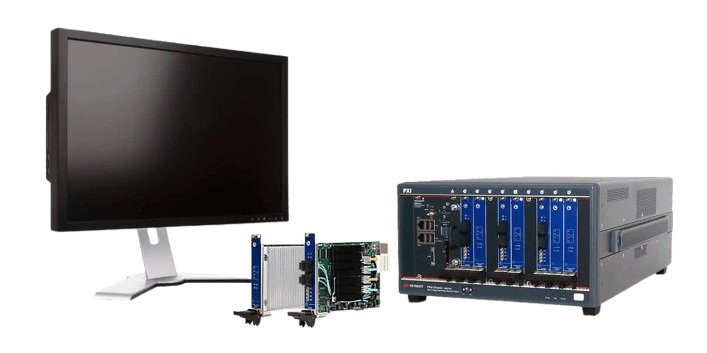
The analyzer fills before the test does
A signal analyzer captures at full bandwidth for as long as its onboard memory lasts, which is often seconds. The moment the buffer fills, acquisition stops to offload, and whatever happened during that gap is gone. For a signal you need to watch for minutes or hours, the instrument is not the limit. The place you put the data is.
Onboard memory is a fixed ceiling
An analyzer holds a set number of samples. At full bandwidth that ceiling arrives fast, and no setting moves it.
The gap during offload is lost
While the instrument writes its buffer out, it is not acquiring. A recurring signal can hide entirely in those gaps.
Post-processing needs the whole capture
Analysis that runs after the fact needs an unbroken record, and a file stitched from buffer dumps is not one.
StreamStor® Cobra Recording System
One platform covers this. The Cobra takes the digitized stream straight off the instrument's optical output and writes it continuously at up to 20 GB/s, which is 160 Gbps. It streams peer to peer over PCI Express, so no host or file system sits between the instrument and storage to introduce a gap.
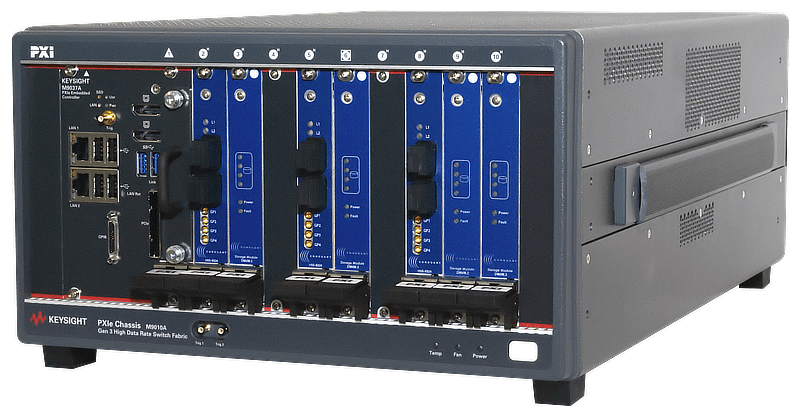
Record and playback
up to 20 GB/s (160 Gbps)
Capacity
up to 256 TB in a 4U chassis
Channels
up to 24 optical, 48 fibers
Transports
ODI, Interlaken, Serial FPDP, Aurora
- ✓Storage is sized to the run, so a long observation is a matter of capacity
- ✓Peer to peer PCI Express moves the stream from the instrument to storage without a host in the path
- ✓Playback reads the capture back out at full rate for analysis and regression
- ✓The SDK covers .NET, C#, C++, C, LabVIEW, and MATLAB, and the system runs commanded over a network link
Why a dedicated recorder holds a rate a server cannot is covered on the high-speed data recording page. Full configurations sit with the Cobra specifications, and capacity options with the storage and drive modules. Most RF sources reach the recorder over ODI and Interlaken, and the replay half is covered on the signal playback page. Or browse all recording solutions.
What the recorder captures in practice
The recorder is front-end agnostic. Here is what that looks like behind two instruments engineers ask about by name, offered as examples of what the recorder captures. It works the same way behind any analyzer or digitizer with a supported optical output.
N9042B UXA analyzer
Behind an N9042B, Cobra captures the ODI output at 10 GB/s, in configurations that scale from 25 minutes to over 5 hours of continuous recording.
See the N9042B recording setup →M8131A digitizer
Behind an M8131A, recording elements combine to hold the digitizer's sustained output, with the platform scaling toward 320 Gbps and continuous storage at up to 40 GB/s per channel.
See the M8131A recording setup →If your instrument produces a digitized stream over ODI or another supported optical interface, the recorder captures it. Tell us the instrument and the rate, and an engineer will confirm the fit.
Built and supported in Longmont, Colorado
Conduant has built recording systems since 1996, with hundreds of installations behind it. Design, build, and support happen in the same building, and the engineer who designed a system answers the phone about it.

- ✓Tested at rate before it ships. Assembled, run at the rate it was ordered for, and verified in Longmont before it ships.
- ✓Front-end agnostic. Sits behind whichever analyzer, receiver, or digitizer the program specced, from any vendor.
- ✓Nothing to write. Capture runs out of the box, with no acquisition software to build.
- ✓Reach the engineer who built it. Support goes to the design team, with no ticket queue and no forced contract.
- ✓Custom builds in as little as 30 days. When the standard configuration does not fit, Conduant builds to the requirement.
- ✓Made and supported in the United States.
Common questions
What is an RF signal recorder?
An RF signal recorder captures the digitized I/Q or wideband output of an analyzer, receiver, or digitizer at full rate, holds it without dropped samples for the length of the test, and replays it at full rate. It sits behind the instrument and does no digitizing of its own.
Does it work with any digitizer?
Yes. The recorder is front-end agnostic. Any analyzer or digitizer with a supported optical output, over ODI, Interlaken, Serial FPDP, or Aurora, streams into it. It has been deployed behind instruments including the Keysight N9042B and M8131A, and works the same way behind others.
Can it record raw I/Q data?
Yes. The recorder writes the digitized I/Q stream exactly as the instrument produces it, at full rate and with no decimation, so the capture is bit-for-bit what came off the output. Capacity is sized to the length of the observation.
How long can it record compared to onboard memory?
Onboard analyzer memory typically holds seconds at full bandwidth. Streaming to a Cobra recorder extends that to minutes or hours of continuous capture. Behind an N9042B at 10 GB/s, configurations scale from 25 minutes to over 5 hours.
Tell us your instrument and your rate
Give a Conduant engineer the analyzer or digitizer you run and the data rate it puts out. You get a straight answer on the fit.
US-based engineers available.