
Signal Playback and Stimulation
Conduant plays recorded data back at the full rate it was captured, so a unit under test sees the real collection, every feature of it, exactly as it was captured. The same system that recorded the data reads it back out, over the same path, at the same rate.
- Replay at the full capture rate, up to 20 GB/s, with no downshift for playback
- Drive a test with the real collected environment, down to the detail a model would smooth away
- One system records and replays, so capture and stimulus share the same platform
- Playback loops for regression and long soak runs without an operator resetting it
US-based engineers available.
A model is not the environment
A generated test signal is only as good as the model behind it. It carries the features someone thought to include and misses the ones nobody predicted. The environment your system will actually face has both. Replaying a real capture puts the whole recorded environment in front of the hardware, including the parts a model would have smoothed away.
Models leave out what nobody anticipated
The value of a field capture is the anomaly you did not know to look for. A synthesized signal cannot contain what its author never modeled.
Regression needs a fixed reference
A test that changes every run tells you nothing about a firmware change. Replaying the same capture holds the stimulus constant so the result belongs to the change.
Real data exposes real behavior
Hardware behaves differently against a live recorded environment than against a clean generated one, and the difference is often the thing under test.
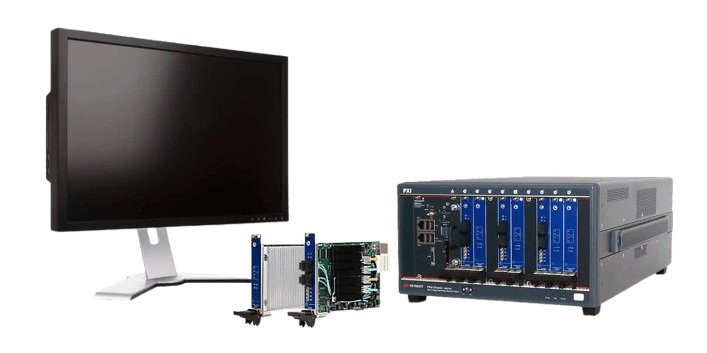
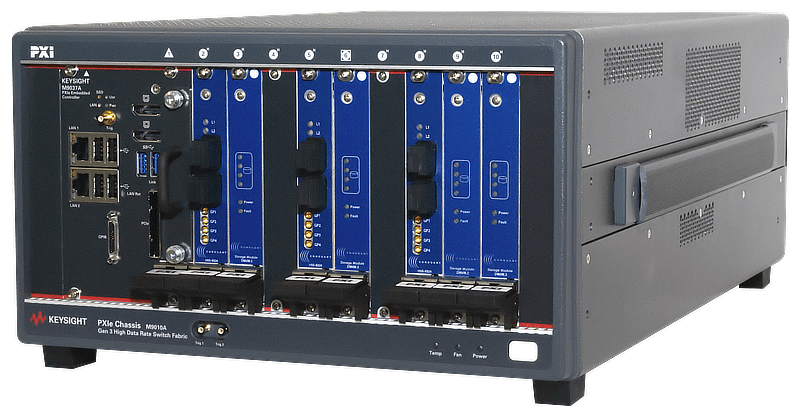
StreamStor® Cobra Recording System
One platform records and replays. The Cobra reads a capture back out over the same peer to peer PCI Express path it recorded on, at up to 20 GB/s, which is 160 Gbps. Nothing is regenerated. The data leaving the system is the data that came in.
Playback rate
up to 20 GB/s (160 Gbps), same as record
Capacity
up to 256 TB in a 4U chassis
Channels
up to 24 optical, 48 fibers
Transports
ODI, Interlaken, Serial FPDP, Aurora
- ✓Playback loops for repeated regression runs and overnight soak testing
- ✓Playback reads any part of a capture back out, and loops it for repeated runs
- ✓Peer to peer PCI Express moves data out to the unit under test without a host in the path
- ✓The SDK covers .NET, C#, C++, C, LabVIEW, and MATLAB, and the system runs commanded over a network link
The capture side of the same platform is covered on the high-speed data recording page. Full configurations sit with the Cobra specifications, and capacity options with the storage and drive modules. The transports that carry data in and out are covered on the ODI and Interlaken page. Or browse all recording solutions.
Three kinds of work replay drives
Playback drives three kinds of work. In each, the point is the same. The hardware is tested against data it will actually see, replayed exactly as it was captured.
Feed a recorded environment into a system under test at full rate, so the hardware runs against real conditions on the bench and frees up range or flight time.
Replay the same capture after a change and compare behavior against a fixed reference, so a difference traces to the change, since the stimulus stayed constant.
Loop a capture for hours or overnight to surface faults that only appear under sustained real load, with no operator resetting the run.
The capture side of this workflow lives on the radar and electronic warfare and RF and spectrum recording pages. Record there, replay here, on one system.
Built and supported in Longmont, Colorado
Conduant has built recording and playback systems since 1996, with hundreds of installations behind it. Design, build, and support happen in the same building, and the engineer who designed a system answers the phone about it.
- ✓Record and replay in one system. The platform that captured the data reads it back out, so there is no second box to integrate.
- ✓Tested at rate before it ships. Assembled, run at the rate it was ordered for, and verified in Longmont before it ships.
- ✓Front-end agnostic. Sits behind and ahead of whichever instruments the program specced, from any vendor.
- ✓Reach the engineer who built it. Support goes to the design team, with no ticket queue and no forced contract.
- ✓Custom builds in as little as 30 days. When the standard configuration does not fit, Conduant builds to the requirement.
- ✓Made and supported in the United States.
Common questions
What is a record and playback system?
A record and playback system captures a data stream at full rate, stores it, and reads it back out at the same rate to drive a test. The same platform does both, so the data used to stimulate a unit under test is the exact data that was recorded.
How fast does playback read back?
Playback runs the same path as record, at up to 20 GB/s, which is 160 Gbps. There is no downshift for playback, so a capture taken at full rate replays at full rate.
Is this an RF signal generator?
No. It is a data replay engine, not a data simulator or generator. It reads back recorded data exactly as it was captured, with nothing synthesized or modeled. That is the point. The test runs against a real capture.
Can playback loop for long test runs?
Yes. The SDK supports playback looping, so a capture can run repeatedly for regression or loop for hours in a soak test, with no operator resetting the run between passes.
Tell us what you need to replay
Give a Conduant engineer the data rate and the test setup, and you get a straight answer on the fit.
US-based engineers available.