
Radar and Electronic Warfare Data Recording
Conduant records the digitized output of your radar or EW receiver at full rate, holds it for the length of the collection, and plays the same data back to drive hardware-in-the-loop test. The recorder sits behind whichever front end your program already specced.
- No dropped samples from the first second of the collection to the last
- Record and replay on one system, so the test runs against the collection itself
- Up to 256 TB in a 4U chassis, enough to hold a full mission in one file
- Works behind any vendor's receiver over ODI, Interlaken, Serial FPDP, or Aurora
US-based engineers available.
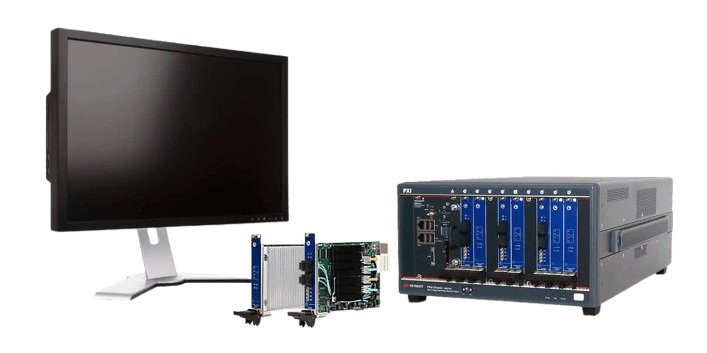
The collection you cannot run twice
Radar and EW data arrives on a schedule you do not control, and most of it happens once. When the recorder drops samples during the pulse train that mattered, you lose the event and the range time it took to get there.
Rare events sit anywhere in the window
Triggered capture asks you to guess when the interesting thing happens. Nobody makes that guess reliably on a collection they have not seen yet.
Rates spike above the average
A recorder sized to the average loses data once the emitter environment gets dense, because instantaneous rates run far higher than the mean.
Capture has to outlast the flight
A capture that fills before the test ends leaves the last hour of a flight undocumented, and that hour is often the one under review.
StreamStor® Cobra Recording System
One platform covers this work. The Cobra records at up to 20 GB/s, which is 160 Gbps, or 1 TB every 50 seconds, and plays that data back over the same path at the same rate. Storage, interfaces, and channel count get configured around the collection.
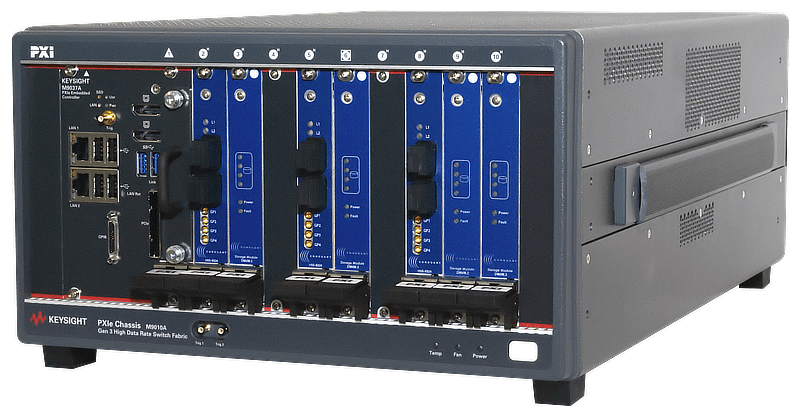
Record and playback
up to 20 GB/s (160 Gbps)
Capacity
up to 256 TB in a 4U chassis
Channels
up to 24 optical, 48 fibers
Transports
ODI, Interlaken, Serial FPDP, Aurora
- ✓Storage is sized to the collection, so a long watch is a matter of capacity
- ✓Trigger and sync arrive from the PXIe backplane and front panel connectors, adaptable to how the program marks time
- ✓Peer to peer PCI Express moves the stream from the front end to storage without passing through a host
- ✓Playback loops for repeated regression runs against the same collection
- ✓The SDK covers .NET, C#, C++, C, LabVIEW, and MATLAB, and the system runs without a host, commanded over a network link
[[SPEC: recording elements combine to aggregate throughput beyond a single system, published as 320 Gbps with continuous storage at up to 40 GB/s per channel. Ken confirms this framing outside its original instrument-specific context before it goes in.]]
Why a dedicated recorder holds a rate a server cannot is covered on the high-speed data recording page. Capacity and removable media options sit with the storage and drive modules. Radar and EW data reaches the recorder over ODI and Interlaken. Or browse all recording solutions.
The test runs against what you collected
The same system that captured the collection reads it back out at full rate to stimulate the unit under test. The recorder reads the file and sends it out. Nothing in between builds a model of it. What the system under test sees is the data that came off the receiver, replayed at the rate it arrived. It is a data replay engine, not a data simulator or generator.
Firmware changes get a clean comparison
Replay the same capture after a firmware change and any difference in behavior traces back to the firmware, since the stimulus was identical.
Range environments on the bench
Once a collection is in the file, the environment that produced it can be put in front of hardware again without scheduling anything.
Overnight soaks run unattended
Playback loops, so an overnight soak runs off the collection without an operator resetting it.
More on how replay works across applications, on the signal playback and stimulation page. For capture behind a spectrum analyzer or wideband digitizer, see RF and spectrum recording.
Built and supported in Longmont, Colorado
Conduant has built recording systems since 1996, with hundreds of installations behind it. Design, build, and support all happen in the same building, and the engineers who designed a system are the ones who answer the phone about it.

- ✓Tested at rate before it ships. The system is assembled, run at the rate it was ordered for, and verified in Longmont before it goes in a crate.
- ✓Nothing to write. Capture runs out of the box, so a program does not spend a quarter building acquisition software.
- ✓Front-end agnostic. The recorder sits behind whichever receiver, digitizer, or FPGA front end the program specced, from any vendor.
- ✓Reach the engineer who built it. Support goes to the design team, with no ticket queue and no forced support contract.
- ✓Custom builds in as little as 30 days. When the standard configuration does not fit the program, Conduant builds to the requirement.
- ✓Made and supported in the United States.
Common questions
What is a radar data recorder?
A radar data recorder captures the digitized output of a radar or EW receiver at full rate, holds it without dropped samples for the length of the collection, and replays it at full rate to drive test. It sits behind the receiver and does no digitizing of its own.
Can I replay recorded data for hardware-in-the-loop test?
Yes. The system reads the collection back out over the same path at the same rate it was recorded, which puts the captured environment in front of the unit under test. Playback loops for long regression runs. It is a data replay engine, not a data simulator or generator.
How do I capture pulsed RF without dropping pulses?
Sustained write capacity has to cover the peak, since dense emitter environments spike well above their mean. The recorder streams peer to peer over PCI Express to dedicated storage, so no operating system or file system decides when to pause.
Can it record SIGINT collection at full bandwidth?
Yes, across up to 24 optical channels at up to 20 GB/s combined. Capacity reaches 256 TB in a 4U chassis and scales further with configuration, so a long collection is a matter of how the storage is sized.
Tell us what comes off your receiver
Give a Conduant engineer your rate, your interface, and how long the collection runs. You get a straight answer on whether we fit.
US-based engineers available.